Sunday, March 13, 2011

Ko Samui, Thailand

Samui, (pronounced Sam-Moo-ee) is the biggest of a group of several dozen islands in the southern Gulf of Siam.  Some have called it the biggest coconut plantation in the world, and until the first backpackers began arriving in the 1970s, life on Samui revolved around the coconut and the income it generated.  The bungalow resorts which mushroomed on every attractive beach on the island quickly saw tourism become the island’s major income earner.  It takes only about one hour to drive completely around the island, if you don’t stop along the many beaches or take to some of the side tracks.

We hired a car & driver to show us the island.  They have elephant safari’s here and it is not unusual to see people riding though the jungle on an elephant. We went to see a waterfall where we walked to the bottom (quite a trek) over rocks and tree roots.  Afterwards, Gary went for a massage while I walked around the town. The car & driver cost us $40. For 4 hours.  This time we didn’t stop for lunch but had a sandwich when we got back to the ship. The waiter we have had since Ft. Lauderdale left the ship last night as he is from Thailand and his contract was up.  We had a small cake for him and sang “For He’s a Jolly Good Fellow.”   
We have 1 day at sea then arrive in Singapore.  Heard about the terrible tsunami in Japan.  We were very concerned as they mentioned Thailand as one of the places possibly affected, but apparently we were clear.

LaemChabang/Pattaya, Thailand

Thailand is a nation of smiling people, happy children, saffron-robed monks and, without doubt, the world’s most congested streets.  It is crisscrossed with canals and Bangkok’s moniker is the Venice of the East.  Rice barges, massive rafts of teak logs, ferry boats and river busses all glide along, presenting a kaleidoscope of changing colors.  It is a mecca for shoppers looking for the exotic, superlative silks, gemstones and intricately decorated objects. Sights are all around, at every turn; the vendors, the children, the food and flower stalls, the shops, the tuk-tuks and traffic.  In short, Thailand is everything you read and hear about and more.
After taking the shuttle into town (a 45 minute ride), we found an internet cafĂ© to call home and answer a few e-mails.  We have been having problems accessing certain accounts due to the poor internet aboard ship.  Since they also blocked Skype, we have been unable to contact anyone for a while.  Afterwards  we went to have a great lunch of fried rice and cashew chicken.  Outside of the restaurant were 4 huge tanks of water filled with small, smelt like, fish.  People sit on a chair above the tank and put their feet in the tank.  The fish then eat off the dead skin.  It’s a good thing we saw it after lunch instead of before.  It was an amazing sight to see.  Can you make out the feet in the tank? Sad to see mega-malls here, Thailand has lost some of it’s charm.
 Thailand is also known for its great massages and inexpensive manicures & pedicures. I decided to have a manicure and pedicure while Gary had a leg/foot massage for 1 hour.  Actually the girl only filed and polished my nails, none of the instruments were sterilized and there was no way she was using a clipper on me. 
The streets are packed with open air shops filled with everything imaginable…it is a shopper’s paradise.  The ship stops here so they can take people on tour to Bangkok.  It’s a 2-2 ½ hour ride each way and they only stay 4 hours.

Wednesday, March 9, 2011

Sihanoukville, Cambodia

Fabulous temples and cities like Angkor Wat were swallowed by jungle, and unknown to the outside world for centuries.  And the way there today begins at a small harbor which the locals claim in immune from typhoons flooding and earthquakes. The former seaside town of Kompong Som did not become the port of Sihanoukville until 1955.  When French Indochina broke up in 1954, Cambodia could no longer send it commerce down the Mekong, since the mouth of that river was now entirely inside Vietnam.  Prince Norodom Sihamouk opened a new commercial port here, named after himself, with the help of French engineers.  He also hoped to capitalize on the sunny weather (an average of 310 sunny days per year) since it usually rains only at night. Sihanoukville remains a pretty but small town where Buddhist temples are the main attractions.  The Independence Monument (1985) near the lower temple commemorates the end of the murderous regime of Pol Pot, who killed millions of his own people. Much of the city had to be rebuilt since that time, giving it a very modern look. Today, Buddhism is Cambodia’s principal religion and the capital is Phonom Penh.  The population is 14,000,000.

We hired a car, with a driver who spoke some English, to show us around.  We went to a Buddhist Temple where we spent time talking to one of the Monks and taking lots of pictures. In 2008 we hired a tuk tuk, which is a 4 passenger covered (with open sides)carriage with 2 bench seats pulled by a fellow on a small motorcycle. This time we went in style and drove around in an air conditioned SUV, really a luxury.  Since the last shuttle back to the ship was leaving at 3:00 we didn’t have much time.  We went to a beautiful hotel called the “Independent” and for $5. we were able to use their facilities.  They provided us with a changing room and towels and said we could use their private beach & pool.  The last time we were here we stayed on the beach, but this time we chose the pool.  Gary opened the bottle of wine we brought in our backpack and we went for a swim.  Afterwards, we had a great lunch of fried rice, prawns, chicken or fish in their main dining room.  The couple with us, David & Barbara, are originally from England but now live in Cypress most of the year.  They still have their home in England, but because of the weather, enjoy Cypress much more.  They are a lovely couple and we had a great day with them.

Monday, March 7, 2011

Lombok

The waters of the Lombok Strait separate the island of Lombok from its neighbor island of Bali.  Lombok resembles Bali as it appeared three decades ago before global travel brought an endless stream of visitors.  It possesses both great natural beauty and a sophisticated culture with a rich artistic tradition. The island’s scenery ranges from spectacular white sand beaches to terraced rice fields clinging to forested slopes. The southern lowlands are devoted to agriculture, including spice, coconut, coffee, vanilla and clove plantations. While Lombok appears a mirror image of Bali, significant differences exist.  For example, many species of birds found on Lombok are not found on Bali, just 20 miles across the strait.  A cultural divide separates the islands as well.  The native Sasak people make up 90 percent of the island’s population.  Unlike the Hindu Balinese, who ruled Lombok for two centuries, the native Sasak are primarily Muslim. The people of Lombok are renowned for sophisticated island crafts ranging from weaving and wood carving to ceramics along with hand-woven silk brocade incorporating metallic fabrics.
Gary and I found a driver who spoke English that would take us around Lombok the entire day.  He had an air conditioned crossover and it was great to get out of the heat.  We thought we might go to the Oberoy Hotel, but it was much too far (2 hours) to travel.  Some of the hotels  are absolutely gorgeous which is a sharp contrast to the living conditions here.  The people are very poor and the Lombok is very dirty with garbage everywhere.  However, wherever we went we were greeted with warmth and friendship.  We saw beautiful wood carvings, different fabrics being woven and decorative pottery being made.   Our driver even took us to his home.  We passed rice field after rice field and saw entire families whiz by on motor scooters.  On one bike there were 3 kids along with both parents – a baby in the mother’s  arms on the back, the father had one son in front of him and another child on the floor near his feet with his head crouched down low.  No helmets, thongs on their feet and all in shorts. 

We stopped for lunch at the Jakarta Hotel and had a wonderful lunch of Nasi Gori (sp) which is fried rice wrapped in a thin layer of scrambled egg along with 2 pieces of chicken satay, 1 fried prawn and something else they call a pickle that made my eyes tear and my nose run…hot, hot, hot. We were gone from 10:00 until 3:30 and, once again, had a great day.
By the way, the gal whose husband was evacuated left the ship today and flew to Bali where she will take a flight to Singapore, stay 2 days, then fly back to Perth.  That’s the only way she could get to her husband.  They still don’t know what is wrong with him. We have 3 days at sea before Cambodia & Thailand.  Been impossible to get on the internet as we are unable to get a signal.  If we are able to access it, it’s very, very, very slow and importing a picture has been hopeless.   

Thursday, March 3, 2011

At Sea

We left Fremantle yesterday and have 3 days at sea until Lombok in Indonesia.  Originally we were to go to Bali, but it’s a holiday and everything will be closed, even the port.  This afternoon an announcement was made requesting blood donors with type A+.  I have A+ but didn’t have my donor card and they had no ability to test.  However, there were several people that answered the page and the doctor did get enough blood.  I have no idea what happened to the man that would require a transfusion, but later that afternoon they asked that the decks be clear of all passengers as a helicopter was coming to evacuate him.  While typing this, one of the crew came to our cabin and told us to evacuate the room by 7:15 this evening.  Since we have a balcony they had to take in all of the outside furniture from the port side of the ship and they also want everyone in the interior. The pick-up was to be over the pool and they had to take away every deck chair along with several of the tall lamps surrounding the upper deck. The captain just announced that the helicopter would arrive about 8:00 on the port side (our side) and that no cameras (flash) can be allowed.  Fortunately, my camera has a night setting and I won’t need to use my flash.  How sad to be fortunate enough to do a world cruise and have it end with a serious illness.
It’s the following day now and we had breakfast with the wife of the fellow evacuated last night.  She only knows that he had internal bleeding and took 4 pints of blood.  After the helicopter picked him up (she was not allowed to accompany him) and took him to the base, a light plane then transported him back to Perth.  They were lucky that this happened close to a major city in Australia instead of some third world country.  So far she has no idea what the problem is or if he will be able to come back to the ship or if she will need to take him back to the U.S.  I’ll keep you posted.

Fremantle/Perth

Fremantle was established in May 1829 when Captain Charles Howe Fremantle (after whom the settlement was named) formally took possession of the whole of the west coast of New Holland.  The captain did this in the name of His Britannic Majesty, and the Union jack was hoisted on the south head of the river.  The famous Fremantle Prison was built by convict labor from limestone rock quarried on site and it was used as a maximum security prison from 1855 until 1991.  The influence of the convicts on the architecture of Fremantle can never be overstated.  From 1850 until 1868 there was a huge building program in the settlement that has resulted in some of the city’s finest buildings.
The big turning point for Fremantle occurred in the 1980’s when it became one of the premier tourist destinations in Australia.  Recognition of the city’s historic heritage led to the preservation and development of the old buildings in the business district.  This process was greatly helped by the 1983 victory of Austrilia 11 in the America’s Cup competition.  This meant that the cup arrived in Australia and that the subsequent America’s Cup challenge was held off Fremantle’s coast.
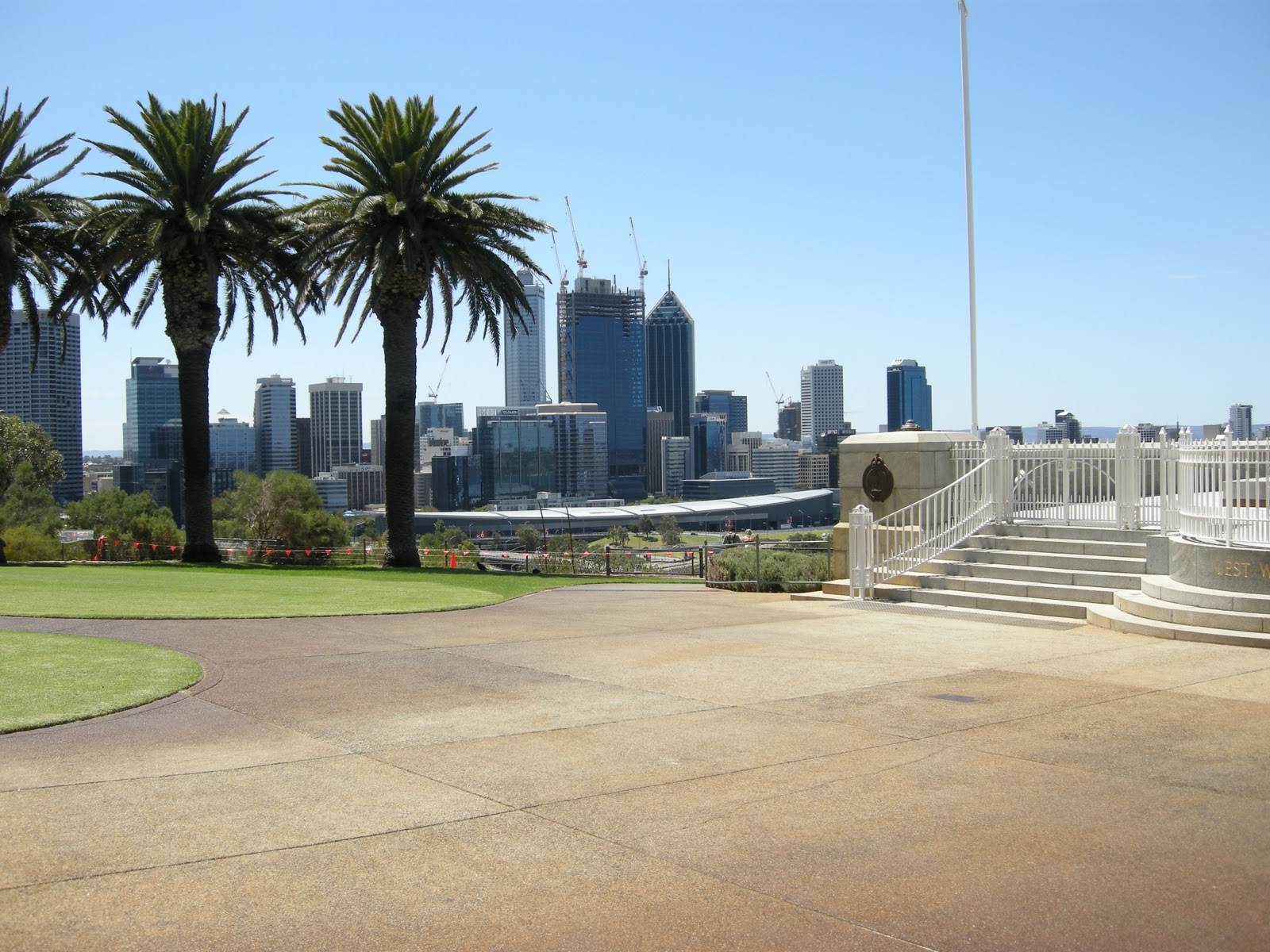
The son of a friend of one of the gals on board, who lives in Perth, picked us up at the ship.  He drove us around the city and showed us all the beautiful sights.  The best stop was the Royal Perth Yacht Club.  For Gary it was like touching the Shroud of Turin as they had won the Americas Cup in the 80’s.  The club itself was just beautiful and the club historian showed us everything.  He asked us to stay for lunch, but since we only had until 4:30 and wanted to see the city, we declined.
.
We leave Australia today for Indonesia.  Australia is a wonderful country, the people are just lovely and it’s absolutely immaculate.  You won’t find as much as a piece of paper on the street.  It’s also one of the most expensive places we will visit.  The minimum wage here is $21.00 per hour.  Maybelline Mascara, normally about $6. at home was $18. and my face cleanser, also $6. was $14. A small can of ordinary bug spray was $12.00.  A Land Rover is $75,000., a Pathfinder is $51,000 and a used Harley Davidson will run you $24,000. 

As we were leaving the port, hundreds of people came to the dock to see us off waving flags.  It was an awesome sight.  The passengers on the new Queen Elizabeth, who have been with us in the last 3 ports, also were on the decks and balconies waving flags as we went by.  What a send off!

Bunbury

The Port of Bunbury, just two hours drive south of Perth, is located on a spectacular peninsula surrounded by blue waters of the Indian Ocean, Koombana bay and the Leschenault Inlet.
With a current population of around 30,000, Bunbury is the third-largest urban area in Western Australia and is the major port and commercial center for the southwest region.  A vibrant town with a strong maritime atmosphere, Bunbury is now renowned for the wild but friendly dolphins that interact with people in Koombana Bay.  The 90 dolphins that live permanently in the calm waters of the bay have been coming in to the beach for decades.  Bunbury’s other features include Western Australia’s southern-most mangroves rare basaltic rock and nearby Tuart Forest.  A colorful “cappuccino strip” of sidewalk cafes and a variety of eating places has developed along the central business district’s Victoria Street.  These cafes and the many award-winning restaurants and historic pubs ensure the atmosphere hums from dawn to dusk.
We took the shuttle to a shopping area where we hired a car & driver and went around the town.  There really is not much to see or do here, but at least we saw a lot of Bunbury, went to the Yacht Club and stopped in a private club where our driver was a member to have a Coke.  We also went to a wildlife park where we saw Kangaroos, peacocks & emus and even had the baby kangaroos eating out of our hands.  It has been very cool from Auckland to Sydney, but today the temperature was about 90 and tomorrow in Perth it will be even hotter.